Recovery in the context of mental health is one of my
biggest passions. I noted in a previous
post (link below) how pleased I was that the NHS Trust I work for is
increasingly implementing recovery-focussed approaches into practice. Whilst this is a step in the right direction,
it is my contention, particularly in light of recent reading, that it is not
enough. The crux of what leads me to
believe this lies with a simple question: what is recovery? The extent to which services, interventions,
etc. are deemed to be conducive to recovery will inevitably vary depending on
how you answer this question, and I posit that the generally accepted
definition of recovery is somewhat different to the one I subscribe to. As a result, in some cases, ‘recovery’ interventions
may be damaging in certain ways, if helpful in others. I’ll explain why…

Many readers are likely to disagree with and even be offended by some of the things I say here, and many will probably see some of my views as quite cynical. I will start on a positive note, which is that I believe everyone has the propensity to recover from what society calls mental illness. I use that phrase because I personally prefer the term distress and have recently learnt a lot about what my friend Marion terms “the politics of madness and the psychiatric deception”. I have touched on this in previous posts and
will do more of the same later, but in a nutshell - and I know this is a very bold statement - knowing the facts leads me
to view mental illness essentially as something that is defined, constructed,
created and perpetuated by psychiatry. With
this in mind, here is a quote from Marion’s book:
“[Psychiatry] contains madness by seeing symptoms of illness
rather than consequences of distress and ‘treating’ these so-called symptoms in
a superficial way. Instead of working
with distress and allowing the individual to flourish, they are often
maintained. If this were not true why do
so many people remain in the system for years, the same problems that brought
them to psychiatry continuing to hinder their growth and independence? Workers…talk about ‘revolving door clients’
as if it were the fault of the individual…rather than any inherent failing
within the system.”
In other words, rather than helping people to become better,
services are often perpetuating problems by taking a closed-minded,
reductionist medical approach. As such,
the introduction of recovery approaches – in my experience, largely in the form
of peer support workers and recovery education – is refreshing and encouraging. The question is, are these approaches really facilitating
recovery? To continue addressing this
question, let me go back to the topic of defining recovery.
The NHS confederation notes three key principles in
recovery, as highlighted by mental health service users. These are:
• the
continuing presence of hope that it is possible to pursue one’s personal goals
and ambitions• the need to maintain a sense of control over one’s life and one’s symptoms
• the importance of having the opportunity to build a life beyond illness
This all sounds good to me, but unfortunately, in practice, it’s not really happening like that. Somewhat paradoxically, the very same web page the above was taken from also defines recovery as “ the process through which people find ways of living meaningful lives with or without ongoing symptoms of their condition”. The problem, to me, lies in the concept of living with symptoms of an ongoing condition, although I am encouraged by the addition of the term ‘or without’.
It seems to me, from experience, that the assumption by most is that recovery is about managing a condition, maintaining a certain level of functioning, avoiding crisis, but continuing to suffer symptoms of some chronic condition. Since such ‘symptoms’ are simply elements of human experience (that cause varying degrees of distress) that have been medicalised and categorised into illnesses by psychiatry, this is quite frustrating.
Onto a positive note: people can and do recover from mental ‘illness’. By this I do not just mean people function in society without crisis and manage their symptoms effectively; I

As I write this, I am reminded of a talk given by Rachel Perkins at a recovery conference I attended last year. Rachel notes the importance of recognising the difference between clinical and non-clinical recovery. Clinical recovery is about reduction in symptoms, maintenance of a decent level of functioning, usually by taking medication long-term. Non-clinical recovery is about building a meaningful life and reaching a state of wellbeing and functioning that is quite possibly beyond where the person was before becoming distressed or ‘unwell’.
This way of working challenges the status quo and the lucrative medical model embraced by psychiatry and mental health services; therefore, it can be incredibly difficult to secure funding and support for such endeavours. Meanwhile, available resources are generally allocated to those ‘recovery’ approaches that may be serving to perpetuate the illness-medication model, thus contributing to the problem of ‘revolving door patients’ referred to previously. This is actually the opposite of recovery, so it is somewhat a paradox! “If the medication works as well as it is purported to, why are people still in the system – often with their original problems unresolved?”. More on this in a later post.
As much as each person is different, so is each person’s experience of mental distress and their recovery journey. Medicalisation detracts from this, not only causing harm in many cases but culturally reducing our ability to deal with distress autonomously. I was inspired by the aforementioned talk by Rachel Perkins, who spoke of the notion that each one of us should be experts in our own recovery and wellbeing and that of those around us. As such the very notion of a recovery ‘model’ is almost futile.
Unfortunately the notion of individualisation is not really present in many mental health services at the moment; it seems that the notion of recovery has been watered down and moulded to fit the already existing modes of treatment: as Marion notes, the implementation of recovery principles such as service user involvement are “manipulated to fit into the organisational box...[they embrace] what suits and fits into the still predominantly biochemical system”. I have witnessed this myself in peer support workshops I have co-facilitated in my workplace, where alongside endeavouring to teach people valuable skills to manage their distress, there is still seemingly relentless reference to the notion that one has a severe and enduring illness and must learn to live with this, helped by medication. And so I find myself greeting these sessions with an odd mixture of admiration and disdain.
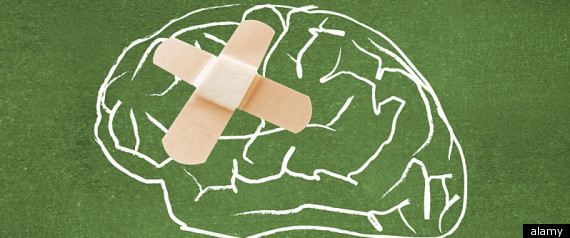 |
| Medication puts a sticking plaster on distress without addressing the issues behind it |
This reminds me of my previous post about interpretations of suffering. If we take suffering not as a sign of illness but as a part of human experience, we can then see it as something that can be worked through and learnt from. To quote Marion again, “we have to take responsibility for our own recovery and not rely on others to do it for us! Recovery is hard work!” This is likely another key contributing factor to a lack of real recovery in services: quick fix approaches are (arguably), at the point of delivery, quicker and more efficient; there is enormous pressure on beds in mental health services and medication is seen as the quickest way to get someone out of hospital. I maintain that in the long run this is less effective and far more likely to end up with further crises and hospital admissions, where true recovery approaches would not have led to this.
What’s to blame for services not living up to promises to recovery recovery-focussed care? Pressure on staff time and unnecessary bureaucracy are factors, but the unrelenting medical approach and the culture is creates is probably most to blame. The Art of Thriving talks of service users becoming disillusioned with services because staff see the patient in terms of illness and not wellness or sanity, interpret coping strategies as ‘symptoms’, focus on medication and fail to recognise the relationship between life events and mental distress.
And so arises the need to go beyond recovery and embrace The Art of Thriving. This will be different for each individual, but crucially, facilitating recovery and thriving in a meaningful way cannot happen without there being a shift in the culture of mental health services. Related to this is the question as to whether hospital is even the right environment for the majority of people experiencing mental distress. I honestly don’t believe it is. If things are to improve and true recovery is to be achieved by more than just the odd few individuals who break free from the psychiatric system, I feel what is needed is a wholesale review of the way we support people in distress. I won’t say anything further on this other than that I take a great interest in Loren Mosher’s Soteria House project, which you can learn about in this video:
So, to return to our original question; what is recovery? I have demonstrated here how my view of it contrasts with psychiatry's, and would be interested to know others' take on this. It is your choice whether to believe in recovery, whether to believe in thriving, whether to believe in the biomedical approach to mental health, whether to believe in individuals’ ability to master their own wellbeing. I hope that whatever you choose to believe is based on sound knowledge of the truths behind it. I believe there are a hell of a lot of people out there who simply want to do the best for others, as I do, and hope that more and more of us will start challenging the current system and channelling our efforts towards true recovery.
NOTE: for copies of The Art of Thriving (£6 + P&P) and other books by Marion Aslan, please contact marionaslan@aol.com
Links:
Previous post mentioned in introduction: http://laurenscloud.blogspot.co.uk/2013/10/all-we-do-is-aim-for-better-things.html
NHS Confederation – Recovery: http://www.nhsconfed.org/Publications/briefings/Pages/Supportingrecoveryinmentalhealth.aspx
Elemental Wellbeing: http://elementalwellbeing.org/

