Wednesday, 17 December 2014

All The Small Things


The last few months have been pretty unsettled for me: new job, back at uni, accepting that I’m going to living with my parents for the next couple of years while I study, trying to build myself a routine and keep busy whilst not overworking myself.  Whilst I haven’t necessarily felt stressed on too many occasions, I often find it difficult to switch off.  To combat this, I’ve been practicing a spot of mindfulness.  Whilst I find meditation quite challenging (which I plan to address by undertaking a mindfulness course in the new year), what I have found to be of benefit is mindfulness of day to day living, which I would really recommend to others for stress reduction and general mood-boosting. 


Gingerbread latte makes me smile, and mindfulness adds to the enjoyment!
Examples of activities you can do this with are eating (really taking the time to eat slowly, notice the colours, smell, textures and taste of every mouthful) and showering (noticing how the water feels as it makes contact with the skin, the smells and feel of products used, and so on).  Personally I find mindful eating less easy to implement into everyday life as you really need a good half hour per meal, but what I have enjoyed on the odd occasion is the mindful consumption of a gingerbread latte (one of my favourite winter treats!). 


Many of us live such hectic lives, and taking a few minutes to be mindful can really help to ground us and switch off from that for a short time, which is really beneficial for wellbeing.  You don’t have to pick certain activities or times of day to practice everyday mindfulness; it is also about generally allowing yourself to notice things.  Those hectic schedules we have means we rush around and often don’t appreciate how amazing the world around us is: a beautiful sky as you drive home from work, the fresh feeling of crisp, cold air on your face as you step outside on a cold but glorious day, the feeling of treading on a crunchy leaf as you walk from the car to the office.  Being more in tune with your senses in this way can work wonders for your mood and it’s so easy to do!


Really noticing things reminds us how amazing the world is
I’ve been making an effort to notice things more over recent weeks and will share a couple of examples here.  Something I’ve really noticed is that I’m taking a lot more joy from other people’s happiness: perhaps I’ll see a child walking down the street hand in hand with a parent, both with big smiles on their faces or giggling at a joke they’ve shared; the simple fact that I notice this rather than being wrapped up in my own thoughts makes me smile.  When I listen to music I really listen to it, noticing all the different layers of sound and how they make me feel.  And the very incident that inspired me to write this post: just today someone pulled out in front of me on a busy road – it’s debatable whether he should’ve done; I wasn’t travelling fast and he may have thought I was letting him out – my initial reaction, as is usually the case when I’m in my car, was to be annoyed.  Then I looked at the guy in the van and he gave me a big cheeky smile, the campest wave of the hand I’ve ever seen in my life and blew me a kiss.  So, instead of being irritated I chose to be entertained and cheered by the guy’s reaction, and in fact it brightened up my day! 


In the example above, by truly noticing what was going on around me, rather than allowing myself to indulge in a negative self-absorbed reaction, I felt much happier than I otherwise would have done.  Everyday mindfulness not only gives us a break from racing thoughts and reduces stress, but it also allows us to appreciate all the small positive things a little more and notice how amazing the world is (refer back to my old post My Heart Is Open… for more on this type of thing!).  So, I would like to put it to you, my wonderful reader, if you don’t already, to try practicing a little everyday mindfulness, and see how much it brightens up your days!


Saturday, 13 December 2014

Bad News Again


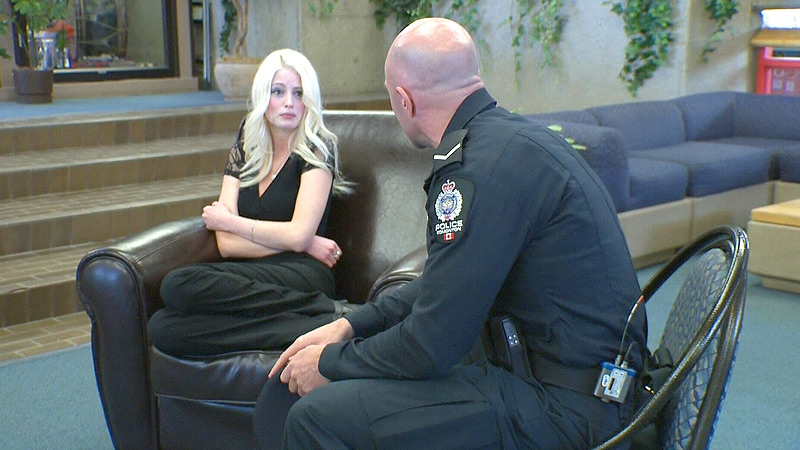
Did you know that people with mental health difficulties are at much greater risk of being victims of crime than the general population?  They are five times more likely to be victims of assault (males three times more likely and females 10 times more likely), and are more likely than the general population to be victimised by someone they know.  Not only that, but when they are victimised they generally perceive the crime as more serious, have greater support needs, find the criminal justice system more stressful and are less likely to have their support needs met.


These alarming statistics all came from the report At Risk, Yet Dismissed, which was published by the charities Mind and Victim Support last year.  They conducted a large research project, in conjunction with some London universities, to find out about people’s experiences of crime, attitudes towards seeking help after being victimised, who they sought help from (if anyone), what the barriers and facilitators were, and their experiences of help-seeking.  Although some positive experiences were disclosed, overall this report presents yet more bad news for people with mental health difficulties.


One of the most notable findings is the fact that there appears to be a ‘culture of disbelief’, whereby people with mental health problems are not seen as credible when reporting crimes.  Sadly this actually seems to be reinforced by the very piece of guidance that exists to ensure victims of crime get the support they need:  the Code of Practice for Victims of Crime states that vulnerable people (including those with mental health problems) should be considered for special measures to give them extra support whilst involved in the criminal justice system. However, it states that this is the case for mentally unwell people not because the experience will be more challenging for them, but because they may not be able to give such good evidence due to their condition!


To me, another of the most salient findings is that people with mental health problems are significantly more likely to experience adverse effects as a result of being victims of crime, most often in the form of emotional distress.  In some cases this leads to the person going into crisis and, in severe cases, hospital admissions.  This highlights the undeniable relationship between trauma and declining mental health, which for me is something that isn’t recognised to a great enough extent in mental health services in general (due to the largely biomedical approach often taken).


The report provides extensive qualitative data around people’s experiences of help seeking (or not!).  examples of findings were that people were more likely to seek help if they had a strong social network to support them, were less likely to report to the police if they had previous poor experience with them, more likely to report if police officers were more accessible in the community, and appreciated things like empathy, time, being believed and being actively listened to when reporting crimes and seeking help.


The final finding I will note here is that, amongst people with mental health problems, those most at risk of crime were people who engaged poorly with services, used drugs and had a history of exhibiting violent behaviour.  This is valuable in giving us clues as to where interventions to tackle the issue of victimisation of people with mental health problems should be targeted.


Based on their findings, Mind and Victim Support make several important recommendations.  These include building collaborative relationships and frameworks for supporting victims, training the police, mental health and community workforce to effectively support these people, empowering people to protect themselves from crime, supporting people to report crimes and seek help, and improving people’s experience of the criminal justice system, including courts.


I’m really pleased to currently be working as part of a project group in Dorset that is tackling the issues raised in this report.  Our Recovery Education Centre has developed a course called Staying Safe: Independence, Choice and Control, which helps people to identify ways they can keep themselves safe and to develop personal safety plans.  In the future we aim to provide this type of education in small groups or 1:1 basis, for people that aren’t able to attend the course, as well as providing more in-depth, individualised education and support to those who need it.  We are in the process of collecting data to demonstrate the need for these interventions in the area, which should help us to obtain funding to continue the good work.  Dorset Police has developed improved mental health training for their staff, and we plan to implement specialised training within mental health services too in the future.  There are so many other things that can be done to address these issues and I look forward to hopefully implementing more and more of them over time.


And Dorset isn’t the only place that’s responding positively and productively to the criminal victimisation of people with mental health problems.  The Mind report Police and Mental Health: Getting it Right Locally highlights a number of organisations nationally who are demonstrating good practice in this area.  And this is by no means an exhaustive account of the good work which is going on; no doubt new innovations and interventions are popping up all the time.  I look forward to hearing about more and more good work, networking with those who are doing this and gaining inspiration for work to do in my own locality.


Building an empathic, supportive workforce is vital in tackling these issues
If we get the business of supporting people who are victims of crime right, I hope this will also help us to tackle some of the general issues surrounding mental health, such as tackling stigma, improving collaborative working and treating people in respectful and individualised ways.  Central to this work is the building of strong communities and improving people’s support networks, which will be beneficial not only for victimisation projects but for society as a whole.  This, I hope, represents a big step in the direction of helping people to recover from trauma and mental distress, ang building a healthier, happier society.

Tuesday, 9 December 2014

That’s How a Superhero Learns to Fly


On Sunday I went to the Lee Valley VeloPark to watch the London round of the UCI Track World Cup 2014.  Track cycling is my favourite sport; it’s so exciting to watch and I love the fact that Great Britain is so good at it!  Lee Valley is where the track cycling for the London 2012 Olympics took place, and whilst I’d enjoyed watching track racing on TV on the odd occasion for a few years, this was the time that made me realise I just had to try this sport out for myself.  


So that’s what I did.  I found out there’s an outdoor velodrome in Bournemouth, not far from where I live, went along to a taster session then over the next few weeks attended three more beginners’ sessions until I became an accredited track rider.  By this time the summer season was over, meaning since the Bournemouth track is outdoors there was to be no more riding there for a good few months.  Fortunately I can a really good tip about some winter training that was available, from a chap I worked with at the time (no less than Gary Dighton who competed in the team time trial at the Barcelona 1992 Olympics!).  He recommended a weekly indoor ‘turbo’ session that took place really close to my house (for those who don’t know, a turbo is a piece of equipment that you can fix the back wheel of a bike to and ride stationary, which is great for controlled sessions and training when the weather’s bad). 


The guy who ran these turbo sessions I started going to is Adam, who, when a few months later I decided to try my hand at racing, became my coach.  I trained hard from March onwards and that summer made my racing debuts both on the track and on road time trial.  A winter of intense training followed; my riding really improved and I put in some good racing/time trial performances this summer just gone too.  Sadly part-way through the race season I decided to take a step back to focus on my career.  Training for track racing is really intense; you have to give it 100% to do well, and it’s draining mentally as much as it is physically.  I think making this decision was the best thing for me at the time, but I still dream of getting back to racing one day!


Going to Lee Valley on Sunday made me think of the fact that this was the very place that inspired me to get into track cycling to begin with.  It reminded me that if you really put your mind to something you can do it: coming to a sport at age 22 I knew it was unlikely I was going to end up at elite level or anything, but I worked hard, did well and got loads of praise from coaches who watched me develop and progress over those couple of years.  Right now, although I’m happy with some elements of my career (mainly that I’m studying for a Masters), there are others I’m yet to find my feet with (I’m struggling to get myself paid work that allows me to work anywhere near my full potential).  Going to the World Cup at the weekend has led to reflection on what I’ve achieved over the last few years and gives me a little boost of inspiration to keep pushing and working hard; if I keep doing this then this will come right.


I’ve spoken in a previous post (The Stairway to Heaven…) about positives coming out of hardship, and that’s what I’m really trying to remember right now.  In some of my blog posts a bang on about things people can do to keep themselves feeling good, and in a challenging time I myself am having to work really hard to practice what I preach!  I’m always inspired by people who overcome adversity to achieve amazing things (see You’re the Inspiration) and this is the case for my track cycling hero Laura Trott. 


This girl never fails to make a race really worth watching and wins gold after gold after gold for Team GB; not only this but off the track she always seems bright, down to earth and funny.  I love the juxtaposition between this bubbly character that we see in interviews and the sheer focus we see in the lead up to a race!  Anyway, although Laura is one of Britain’s best female athletes, her journey hasn’t been without it’s challenges: she was born with a collapsed lung and later diagnosed with asthma, being advised to use sport to help regulate her breathing.  But physical training with a health condition isn’t always plain sailing: in interviews I’ve heard Laura talk about the fact that sometimes she ‘trains so hard her teeth hurt!’, and she can often be observed throwing up after a race (poor girl!). She defies these challenges, brushes them off and carries on, and is incredibly successful as a result. 


In the coming weeks and months, I may continue to face the same struggles I have done over recent ones.  But my recent visit to Lee Valley VeloPark has given me a little bit of extra motivation to push through and carry on working hard in the face of hardship.  I hope this has made for a decent read and that you enjoy my pictures from the track! 


Sunday, 23 November 2014

You Won't Feel a Thing


I saw something on TV today about plans for the NHS to publish surgeons’ death rates to improve transparency and enable people to use this information to guide their decisions as to whether to go with a particular surgeon or not.  I found this quite interesting so thought I’d post my thoughts on it, which I hope makes a refreshing change from the types of issues I normally write about!


I’m all for the NHS being as open, honest and transparent as possible, and I’m all for patients being given comprehensive information, choice and control in their care.  Unfortunately, I don’t think publishing surgeon success rates will achieve this.  Numbers of deaths occurring under a person’s care, although at face value may seem important, is actually a pretty arbitrary and fairly useless piece of data.  There are so many other variables to be considered, such as type and difficulty level of the procedure, pre-existing health factors or underlying conditions in the patient, and unforeseen complications during surgery.  Providing death rates alone could result in a very capable surgeon who is able to deal with complex cases being considered less competent by patients than they really are, meaning said patients may request a different surgeon (and perhaps end up with a poorer outcome!).  This is a problem, and I believe that if the NHS is to share this data with patients it should be provided in context and supplemented by other data to help the patient make sense of it.


Further, it seems possible that this will be detrimental to staff morale and performance: surgeons may become less likely to opt to take on complex or challenging cases, and the publication of figures may create scapegoating when things go wrong in surgery.  It is important to remember that a whole team of people is involved in surgery, not just the surgeon.  There may be a danger that by publishing this data, fingers are wrongly pointed at surgeons regarding their performance (when it is quite possible that deaths may have been due, for instance, to an error by the anaesthetist).   The culture of box-ticking, blame and covering one’s back is in my opinion already too prominent in the NHS, and there is a danger that this move will only serve to make things worse on that front.


Patient reassurance: death rates probably not the answer!
Finally, whilst in potentially life-threatening operations this data may be salient, in most cases the person would surely more likely want to know their anaesthetic will be successful, recovery will be quick, they will have minimal pain and be unlikely to have to undergo further surgery (“it’s ok, you won’t feel a thing”, that sort of thing!).  The value of publishing death rates would be much enhanced by providing information on these sorts of things too.  This is the type of information that would really empower patients to make truly informed choices about their care.


Finally, surely it is reasonable to expect that generally you are in safe hands when undergoing surgery?  If a surgeon’s death rates raised cause for concern, I would certainly hope that the NHS would be investigating this and taking necessary action where competency proves to be below the required standard.  If standards are robustly monitored in this way then one would expect there to be no cause for concern, which would in fact make the publication of this data completely redundant!


Does this move really promote patient choice?
To conclude, whilst I am in favour of NHS transparency and patient choice, I really don’t believe the publication of surgeons’ death rates will make any real progress towards achieving this.  Sadly I believe this is a tokenistic gesture to give the illusion of openness and patient control whilst not actually delivering this, but continue to look forward to the day when our healthcare services genuinely give us these outcomes!